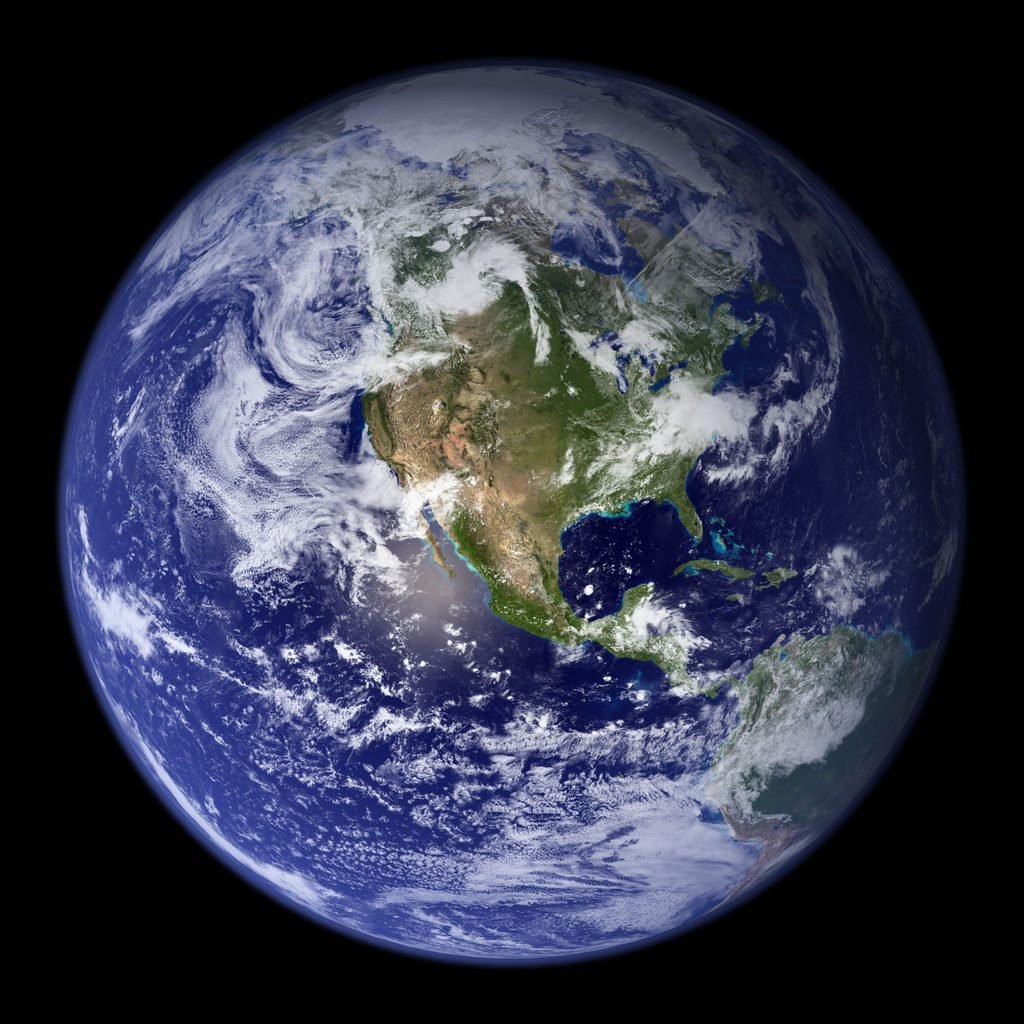
Every time I look up at the night sky through the eyepiece of a telescope, observing the distant stars and swirling galaxies, a profound and inevitable question arises in my mind: Are we completely alone in this unimaginably vast universe? As of today, humanity has not discovered a single shred of definitive evidence proving the existence of extraterrestrial life. Despite decades of scanning the cosmos with radio telescopes and launching probes into the deep void, the universe remains eerily silent. Statistically speaking, considering there are hundreds of billions of galaxies, each containing hundreds of billions of stars, it seems almost mathematically impossible that intelligent life does not exist somewhere else. Yet, in our immediate cosmic neighborhood, planet Earth remains the sole, fragile oasis of life.
The reason our world harbors such an explosion of biodiversity while our neighboring planets are barren, irradiated, or toxic, boils down to a miraculous combination of orbital positioning, internal planetary dynamics, and a sequence of fortunate cosmic events. In this comprehensive post, we will explore the intricate physical specifications, the delicate balance of the habitable zone, the protective magnetic forces, and the profound philosophical implications of life on this pale blue dot.
1. Core Specifications of Planet Earth
To truly understand why this world is so exceptionally different from its planetary siblings, we must first examine its fundamental physical and orbital characteristics. As the third rock from the Sun, it is the largest and most massive of the four terrestrial (rocky) planets in the solar system.
Here are the detailed physical characteristics that define our home:
| Feature | Specification Details |
| Equatorial Diameter | 12,756 km |
| Mass & Volume | 5.972 × 10²⁴ kg / 1.083 × 10¹² km³ |
| Average Density | 5.514 g/cm³ (The densest major planet in the solar system) |
| Surface Temperature | Ranging from -89.2°C (Vostok Station) to 56.7°C (Death Valley), Avg 15°C |
| Atmospheric Composition | 78.08% Nitrogen, 20.95% Oxygen, 0.93% Argon, 0.04% Carbon Dioxide |
| Surface Gravity | 9.80665 m/s² (Standard 1 G) |
| Orbital Period | 365.256 days (One astronomical year) |
| Axial Tilt | 23.439 degrees (Creating our four distinct seasons) |
These seemingly dry numbers actually represent a highly tuned physical environment. The high density implies a massive metallic core, the axial tilt guarantees seasonal variations that drive global weather patterns, and the specific atmospheric composition provides the exact chemical requirements for complex biological functions.
2. The Goldilocks Zone and the Miracle of Liquid Water
The most critical factor that distinguishes planet Earth from hellish Venus or freezing Mars is its precise distance from the Sun, averaging about 149.6 million kilometers (1 Astronomical Unit). This specific orbital path places us perfectly within the Circumstellar Habitable Zone, affectionately known by astronomers as the “Goldilocks Zone.”
Just like the porridge in the famous fairy tale, the temperature here is not too hot and not too cold—it is just right. If our orbit were slightly closer to the Sun, increased solar radiation would trigger a runaway greenhouse effect, evaporating the oceans and leaving a scorching wasteland like Venus. Conversely, if we were slightly further away, the oceans would freeze solid, transforming the globe into a barren, icy desert akin to Mars.
Because we sit precisely in this habitable sweet spot, water can exist abundantly in its liquid state on the surface. Liquid water is universally considered the ultimate prerequisite for life. It is the perfect chemical solvent, allowing complex organic molecules to mix, interact, and eventually form the building blocks of life. Today, vast oceans cover approximately 71% of the surface, regulating the global climate by absorbing solar heat and distributing it across the globe through massive oceanic currents.
3. The Life-Sustaining Atmosphere and Climate Regulation
While the Goldilocks zone dictates the amount of solar energy we receive, it is our unique atmosphere that regulates and optimizes that energy. The atmosphere is divided into several layers: the troposphere (where our weather occurs), the stratosphere (containing the crucial ozone layer), the mesosphere, the thermosphere, and the exosphere.
Unlike the suffocating carbon dioxide atmosphere of Venus, our atmosphere is perfectly balanced. It contains enough greenhouse gases (like carbon dioxide and water vapor) to trap just the right amount of heat, keeping the global average temperature at a comfortable 15°C. Without this natural greenhouse effect, the average temperature would plummet to a freezing -18°C, making the survival of complex ecosystems impossible.
Furthermore, the ozone layer located in the stratosphere acts as a planetary sunscreen. It absorbs the vast majority of the Sun’s lethal ultraviolet (UV) radiation. Before the ozone layer fully formed billions of years ago, life was strictly confined to the deep oceans, where water provided a physical shield against UV rays. Once the atmosphere became oxygen-rich and the ozone layer was established, life was finally able to safely migrate onto the continents, leading to an explosion of terrestrial biodiversity.
4. Internal Anatomy, Plate Tectonics, and the Geodynamo
To truly appreciate the uniqueness of this world, we must look deep beneath the oceans and continents. The interior of planet Earth is dynamic and relentlessly active. It consists of a solid inner core made of iron and nickel, surrounded by a swirling liquid outer core, which is enveloped by a thick, semi-solid mantle, and finally topped with a thin, brittle crust.
This internal heat and structure drive two incredibly important planetary mechanisms:
- Plate Tectonics: The crust is not a single solid shell; it is broken into numerous massive tectonic plates that constantly drift, collide, and slide past one another, driven by convection currents in the mantle underneath. This geological recycling process is vital for life. It regulates the long-term carbon cycle through volcanic outgassing and the subduction of carbonate rocks, preventing the atmosphere from becoming too thick or too thin over millions of years.
- The Magnetic Field and Auroras: Deep within the interior, the churning, electrically conductive liquid iron in the outer core acts like a massive planetary dynamo. This movement generates a powerful, invisible magnetic shield known as the magnetosphere. This magnetic field stretches far out into space and serves as an impenetrable deflector shield against the solar wind and cosmic radiation. Without this magnetic shield, the solar wind would gradually strip away our atmosphere, just as it did to Mars billions of years ago. A beautiful byproduct of this protective interaction is the Aurora (Northern and Southern Lights). When highly charged solar particles crash into our magnetic field and get funneled toward the poles, they interact with atmospheric gases to create breathtaking, dancing light shows in the night sky.
5. The Moon: Our Gravitational Anchor
Another miraculous feature that makes this world so hospitable is our unusually large natural satellite, the Moon. According to the widely accepted Giant Impact Hypothesis, a Mars-sized celestial body named Theia collided with the early Earth about 4.5 billion years ago. The massive debris field ejected from this cataclysmic impact eventually coalesced to form the Moon.
The Moon is proportionally very large compared to its host planet, and its gravitational influence does much more than just create the ocean tides. The Moon acts as a massive gravitational anchor, stabilizing the axial tilt at approximately 23.5 degrees. Without the Moon’s stabilizing pull, the axial tilt would wobble chaotically over time, oscillating anywhere from 0 to 85 degrees. Such extreme wobbling would cause catastrophic, rapid climate shifts, plunging equatorial regions into ice ages and baking the poles, which would make the evolution of complex, intelligent life incredibly difficult, if not impossible.
6. The Great Oxygenation Event and the Evolution of Life
The history of planet Earth is a dramatic saga of biological and geological co-evolution. For the first two billion years, the atmosphere was completely devoid of free oxygen, consisting mostly of nitrogen, carbon dioxide, and methane. The turning point occurred roughly 2.4 billion years ago during the Great Oxygenation Event.
Cyanobacteria, simple microscopic organisms living in the primordial oceans, evolved the miraculous ability to perform photosynthesis—converting sunlight, water, and carbon dioxide into energy while releasing oxygen as a waste product. Slowly but surely, over hundreds of millions of years, these tiny organisms pumped unimaginable quantities of oxygen into the oceans and the atmosphere. While this oxygen was actually highly toxic to most of the anaerobic life forms existing at the time, it paved the way for the evolution of entirely new, complex aerobic organisms that used oxygen to generate vast amounts of biological energy. This eventually led to the Cambrian Explosion, the rise of dinosaurs, the emergence of mammals, and ultimately, the dawn of human civilization.
7. The Fermi Paradox and the Search for Intelligent Life
Understanding the astronomical odds that led to our existence brings us back to the philosophical question: Are we alone? The universe is approximately 13.8 billion years old and contains trillions of galaxies. According to the Drake Equation—a probabilistic argument used to estimate the number of active, communicative extraterrestrial civilizations in the Milky Way galaxy—there should theoretically be thousands, if not millions, of advanced alien civilizations out there.
Yet, we observe the “Great Silence.” This glaring contradiction between the high probability of extraterrestrial life and the absolute lack of evidence is known as the Fermi Paradox, named after physicist Enrico Fermi who famously asked, “Where is everybody?”
There are many terrifying and fascinating theories to explain this. Perhaps the “Great Filter” exists—an evolutionary or technological hurdle so difficult to pass that almost no civilization survives it. Maybe life is common, but intelligent life is exceedingly rare. Or perhaps advanced civilizations inevitably destroy themselves through nuclear war, climate collapse, or artificial intelligence before they can colonize the stars.
Another possibility is that the exact conditions found here—a stable Goldilocks orbit, a protective magnetic field, active plate tectonics, a stabilizing moon, and the absence of completely sterilizing asteroid impacts—are so statistically improbable that planet Earth is indeed a miraculous cosmic anomaly.
8. Preserving the Pale Blue Dot

When the Voyager 1 spacecraft turned its camera around in 1990 from a distance of 6 billion kilometers, it captured a legendary photograph of our world. In that image, our entire planet appeared as nothing more than a tiny, fragile “Pale Blue Dot” suspended in a sunbeam. Carl Sagan famously noted that every human being who ever lived, every king, every peasant, every war, and every scientific discovery took place on that minuscule mote of dust suspended in the endless cosmic dark.
Whether the universe is teeming with hidden intelligent life, or whether we are the sole conscious observers of the cosmos, one fact remains absolute: this is our only home. There is no backup planet, and no alien civilization is coming to save us from ourselves. Understanding the incredible astronomical rarity and delicate physical balance of our world should fill us with a profound sense of responsibility to protect our biosphere, preserve our climate, and cherish this extraordinarily beautiful, life-giving oasis in the cold, dark void of space.
Leave a Reply